That matters because the wrong coach isn't just a waste of money. A coach who applies generic productivity frameworks to an ADHD brain — or frames the work as fixing your deficits — can actively reinforce shame and stall your progress.
This guide covers what to look for in an ADHD coach, where to find qualified candidates, and how to evaluate whether someone is actually equipped to work with your specific brain.
Key Takeaways
- ADHD coaching is unregulated — PAAC or ICF credentials plus ADHD-specific training are the baseline standard
- A good coach takes a strengths-based, neuro-affirmative approach — not a deficit-fixing one
- Specialization matters: match the coach's focus to your actual goals
- Chemistry is non-negotiable — always schedule a discovery call before committing
- The goal is building your independence and self-understanding, not reliance on a coach
What Is an ADHD Coach — and Do You Need One Instead of a Therapist?
ADHD coaching is a forward-focused, goal-oriented partnership. Coaches help adults with ADHD build practical systems, navigate executive function challenges, and put their strengths to work. CHADD defines it as a practical intervention targeting planning, time management, goal setting, organization, and problem solving.
Common coaching focus areas include:
- Task initiation and follow-through
- Time blindness and calendar architecture
- Decision-making and prioritization
- Career transitions and business structure
- Managing energy and hyperfocus strategically
- Building self-understanding about how your brain works
Once you understand what coaching covers, the next question most people ask is: how is this different from therapy?
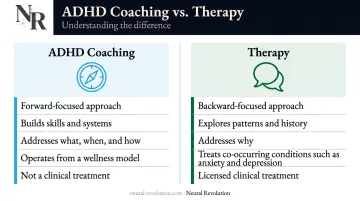
How Coaching Differs from Therapy
| Coaching | Therapy |
|---|---|
| Forward-focused — building skills and systems | Backward-focused — understanding patterns and history |
| Addresses what, when, and how | Addresses why |
| Wellness model, not clinical treatment | Can treat co-occurring conditions |
| Not a replacement for mental health care | Addresses anxiety, depression, trauma, and more |
Many adults benefit from both simultaneously — they're not mutually exclusive.
That said, if you're dealing with significant unmanaged mental health symptoms — unaddressed depression, trauma, or mood disorders — work with a licensed clinician first or alongside coaching. Coaching cannot and should not substitute for clinical care.
The Challenge: ADHD Coaching Is an Unregulated Field
Unlike therapists or psychologists, ADHD coaches are not licensed by any government body. ADDitude confirms there is no single regulating body that certifies ADHD coaches — meaning someone with zero training can legally advertise their services tomorrow.
The real-world risk isn't just wasted money. An unqualified coach may:
- Apply generic productivity systems that ignore how the ADHD brain actually processes motivation and time
- Frame coaching around fixing weaknesses rather than building on strengths
- Build dependency through accountability check-ins without teaching you why strategies work or fail
- Reinforce shame rather than competence
Credentialing bodies — PAAC, ICF, and CCE/BCC — are the consumer's first filter. But credentials alone don't tell you whether a coach understands the ADHD brain, adapts to your specific challenges, or can help you build skills that last beyond the coaching relationship.
What to Look For in an ADHD Coach
Finding the right coach requires evaluating several dimensions at once: training, approach, philosophy, specialization, and interpersonal fit.
ADHD-Specific Training and Credentials
General life coaching programs don't cover the neuroscience of ADHD, executive function deficits, or ADHD-specific motivation patterns. ADHD-specific credentials signal that a coach has received training that goes beyond generic coaching hours.
The main credentialing bodies:
- PAAC (Professional Association of ADHD Coaches) — the only body dedicated exclusively to ADHD coaching. Credential levels include CACP (60 verified ADHD coaching hours), PCAC (250 hours), and MCAC. All require ADHD-specific training, ethics commitments, and observed coaching sessions
- ICF (International Coaching Federation) — certifies general coaching competence at ACC, PCC, and MCC levels. Does not require ADHD-specific training, but is a marker of coaching rigor
- BCC through CCE (Center for Credentialing & Education) — another general coaching credential demonstrating professional competency standards
The best coaches typically hold a combination: PAAC credentials confirming ADHD-specific training, plus general coaching rigor from ICF or BCC. Always verify credentials directly on the issuing body's website — don't take a website listing at face value.
A Neuro-Affirmative, Strengths-Based Approach
A neuro-affirmative coach views ADHD as a different brain profile with genuine strengths — not a disorder to fix. This isn't just philosophical positioning. A 2025 peer-reviewed study found that adults with ADHD endorsed ten strengths more strongly than non-ADHD participants, including hyperfocus, creativity, and humor.
What this looks like in practice:
- The coach talks about your strengths, not just your gaps
- Systems are designed to work with your brain, not impose neurotypical workflows onto it
- The goal is momentum and self-understanding, not compliance
Listen carefully to how a prospective coach describes their work. Do they frame coaching as correcting deficits? Or do they talk about harnessing what you're already good at?
Lived Experience and Deep ADHD Knowledge
A coach who has personal ADHD experience — or deep immersion in ADHD research — is more likely to understand the emotional texture of ADHD: the shame, the chronic inconsistency that looks like laziness, the exhaustion of masking. They're less likely to default to neurotypical advice that doesn't transfer.
Lived experience alone isn't sufficient, though. It needs to be paired with professional training and a structured coaching framework — that combination is what separates a relatable person from an effective practitioner.
Specialization That Matches Your Goals
ADHD coaching is not one-size-fits-all. A coach who specializes in teenagers and homework systems is a different practitioner than one who works with entrepreneurs navigating hyperfocus, burnout, and business structure.
Before you search, identify your primary goals:
- Executive function at work?
- Career transition or entrepreneurship?
- Late diagnosis and identity rebuilding?
- Leadership and team management?
- AuDHD (ADHD + autism) specific needs?
Ask coaches directly: "Who is your ideal client?" and "What do most people come to you for?" The answers reveal whether their expertise genuinely aligns with your situation.
A Method That Builds Independence, Not Dependency
ADHD coaching isn't primarily about accountability check-ins. Check-ins can be part of the work, but a good coach's real goal is helping you understand why certain strategies work for your brain — so you can build your own internal scaffolding.
Ask in a discovery call: "What do clients walk away with when coaching ends?" If the answer centers on external check-ins rather than self-knowledge and transferable systems, that's a red flag.
Chemistry and Coaching Fit
Coaching is a collaborative relationship. If you don't feel comfortable being honest with your coach, the work stalls. The ADHD brain is particularly sensitive to shame and interpersonal cues — a coach who doesn't make you feel genuinely seen will trigger avoidance, not engagement.
A good fit during a discovery call feels like:
- You can ask "dumb" questions without hesitation
- The coach's communication style matches how you process information
- You leave the call feeling energized, not analyzed
Chemistry is what determines whether you actually follow through — and for an ADHD brain, follow-through starts with feeling safe enough to be honest.
How to Find an ADHD Coach: A Step-by-Step Approach
Step 1 — Clarify Your Goals First
Before evaluating coaches, write down 3–5 specific things you want to change or achieve. The clearer you are, the better you can assess whether a coach's specialization matches your needs.
Step 2 — Use Reputable Directories
These filter for training and credentials — unlike a general Google search:
- PAAC Registry — paaccoaches.org/find-a-coach — requires PAAC credentials and ethics commitment
- ACO Directory — adhdcoaches.org/find-your-coach — applies verified training and experience requirements
- ADDCA Coach Directory — addca.com/adhd-coach-directory — lists coaches who meet PAAC and ICF standards
- ADDA Professional Directory — add.org/professional-directory
Step 3 — Schedule Discovery Calls with 2–3 Coaches
Most coaches offer a free or low-cost 15–30 minute consultation. Approach it as the person doing the hiring — you're evaluating fit, not auditioning. Useful questions:
- What is your coaching approach?
- Have you worked with clients who have goals similar to mine?
- How do you structure sessions?
- What do clients leave coaching with?
Step 4 — Watch for Red Flags
Walk away if you notice:
- Vague or unverifiable credentials
- A one-size-fits-all methodology
- ADHD framed primarily as a problem to fix
- Overpromised results or timelines
- Pressure to sign a long-term contract before any trial period
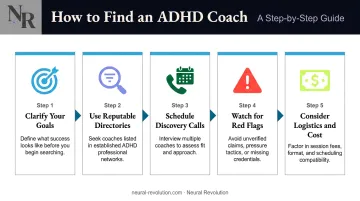
Step 5 — Consider Logistics and Cost Honestly
ADHD coaching typically isn't covered by insurance. ADDitude reports costs range from pro bono to $1,500 per month, with an average of $300–$600 per month depending on the coach's experience and specialization.
Ways to offset costs — eligibility varies, so verify with your provider:
- HSA or FSA accounts (confirm coaching qualifies with your plan administrator)
- Employer wellness stipends
- Professional development budgets
- Self-employment business deductions if applicable
A more experienced coach often gets you to your goals in fewer sessions — meaning the higher per-session rate can translate to lower total spend over time.
How Neural Revolution Can Help
Neural Revolution is a boutique ADHD coaching practice built at the intersection of academic research, clinical understanding, and lived ADHD experience. It's one of the few practices where coaches hold both doctoral-level credentials in psychology and ADHD-specific coaching credentials.
Dr. Eliza Barach (PhD in cognitive psychology, BCC) founded the practice after recognizing that her true calling was applying cognitive science to real-world impact, not staying in academia. Her coaching integrates evidence-based frameworks like Self-Determination Theory, the Cognitive Energetic Model of ADHD, and Dr. William Dodson's INCUP model.
Meredith Knauer Crull (M.S. in Applied Psychology, CACP through PAAC) brings a psychology foundation paired with lived neurodivergent experience. She also serves on the PAAC board as Membership Chair.
The DREAMS™ framework — Dr. Barach's proprietary, research-grounded alternative to SMART goals — is one example of what an ADHD-specific methodology looks like in practice. Where SMART goals rely on delayed, abstract rewards that don't activate the ADHD dopamine system, DREAMS™ was designed around how ADHD brains actually process motivation, emotional salience, and goal pursuit.
That depth of methodology shapes how the practice is structured. Key features of working with Neural Revolution:
- Clients are matched to coaches based on fit, not just availability
- Client volume is kept intentionally low to support personalized work
- Sessions run 60 minutes, pay-as-you-go, with no long-term contracts
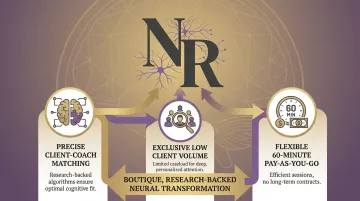
For high-achieving ADHD professionals and entrepreneurs, this means access to rigorous, research-backed coaching without the commitment barriers that make starting feel harder than it needs to be.
Frequently Asked Questions
How do I find a good ADHD coach?
Start with reputable directories like PAAC, ACO, and ADDCA, which filter for credentials and training. Schedule discovery calls with two or three candidates and evaluate both their qualifications and how the conversation feels. Fit matters as much as credentials — don't skip the conversation.
What credentials should an ADHD coach have?
Look for PAAC credentials (CACP, PCAC, or MCAC), which confirm ADHD-specific training and verified coaching hours. ICF credentials (ACC, PCC, MCC) and the BCC through CCE confirm general coaching competence but don't require ADHD-specific training. The strongest candidates hold credentials from both.
What's the difference between an ADHD coach and a therapist?
Therapists address emotional and psychological history and can treat co-occurring conditions like anxiety and depression. ADHD coaches are forward-focused, helping clients build practical systems, executive function skills, and strategies for daily and professional life. Both can be valuable and aren't mutually exclusive.
How much does an ADHD coach cost?
Coaching is not typically covered by insurance, with costs generally ranging from $300 to $600 per month depending on experience and specialization. HSA/FSA eligibility isn't broadly confirmed by the IRS, so verify with your plan administrator before assuming coverage.
Do I need an ADHD diagnosis to work with a coach?
Most coaches don't require a formal diagnosis — many clients are mid-evaluation or self-identified. A diagnosis does matter if you need workplace accommodations or want co-occurring conditions addressed by a clinician.
How long does ADHD coaching take to show results?
Most clients notice shifts in awareness and strategy within the first few sessions. More durable habit formation typically takes three to six months of consistent work. Timeline depends on your goals, how actively you engage, and the complexity of what you're working on.